Visualizzazione post con etichetta mediterranean food. Mostra tutti i post

lunedì 2 maggio 2016

Sardinian pizzette (special recipe from Italy)


I sometime give in to the charm (and nostalgia) of Cagliari's small pizzas. They are small pizzas, made of puff pastry, stuffed tomato, olive oil and capers. Usually, oddly enough, they are consumed at breakfast ...! In every Cagliari's bars you can find them warm and fragrant accompanied by juice or cappuccino. They are a must for young people returning from the clubs in the early hours of the morning. When I was younger I used to do it with my friends as well; it's easy to find bakeries and bars that sell pastries and hot pizza at 2 a.m., a very nice occasion, shared with friends, sitting on a bench, under the blue Sardinian skies, to close the cheerful evenings. Ooooh how many memories I have in my mind now!!!

Ingredients for two / three people

two rolls of puff pasttry
a bowl with: tomato sauce, olive oil, salt, oregano, two tablespoons of tomato concentrate; well mixed all together
an egg: open it and separate the yellow from the white and put them in two separate bowls
capers
Method
Open the puff pastry and make some squares and cut. Make sure that the measures are aligned on the two rolls. Prick the pastry with a fork. Now put a tablespoon of sauce in the center of the squares of the first roll. Add the capers. Add a pinch of salt. With a pastry brush, pass the egg white on the edges of every small pizza. Now close well with the second roll. Lightly beat the egg yellow; brush on the surface of the pizza.


Pass in cooking for 10-15 minutes, in a pre-heated oven for 10-15 minutes at 180 °. They will come fragrant, with a delicious and light filling. Just be careful: inside they are very hot, blow some air inside before!


Small pizza (Pizzette) comes from Cagliari, a city in the south of Sardinia (Italy)


mercoledì 17 dicembre 2014

Coniglio alla cacciatora - Rabbit cacciatore

Coniglio alla cacciatora - Rabbit cacciatore
Il coniglio alla cacciatora è una classica ricetta di campagna. Esalta la genuina rusticità della sua carne con un condimento tutto mediterraneo a base di olio extravergine di oliva, capperi e rosmarino
The rabbit cacciatore is a classic country recipe. It enhances the genuine rusticity of white flesh with a Mediterranean dressing made by olive oil, capers and rosemary.

Rosmarino e capperi: un'abbinata vincente!  - Rosemary and capers: a winning couple!

Ingredienti per due persone:

un coniglio da 500/600 grammi già tagliato a pezzi;
brodo;
olio di oliva extravergine;
verdure per soffritto (carote, cipolla, sedano) già affettate a piccoli pezzi;
capperi;
rosmarino;
vino bianco (mezzo bicchiere).

Ingredients for two people:

a rabbit of 500/600 grams already cut into pieces;
broth;
extra virgin olive oil;
vegetables for sautéed (carrots, onion, celery) already sliced into small pieces;
capers;
rosemary;
white wine (half a cup).

Procedimento - Procedure:

Scaldare il brodo in un tegame e, se necessario, aggiungere un po' di sale;
Heat the broth in a saucepan and, if necessary, add a little of salt.


Versare tre dita di olio in una pentola capiente, aggiungere le verdure e farle soffriggere a fiamma bassa per 5 minuti.
Pour three fingers of oil in a large pot, add the vegetables and sauté for 5 minutes.


Porre i pezzi di coniglio nella pentola e far rosolare per 5 minuti girandolo più volte.
Place the rabbit pieces in the pot and brown for 5 minutes turning several times.


Bagnare il coniglio con il vino e far evaporare per 3 minuti, rigirandolo. 
Wet the rabbit with the wine and let evaporate for 3 minutes, turning.


Aggiungere il brodo e alzare la fiamma (deve essere una fiamma media).
Add broth and raise the heat (It must be a medium flame).


Distribuire i capperi e il rosmarino.
Distribute the capers and rosemary.


Una volta che la salsa ha preso a bollire, abbassare la fiamma a poco più del minimo (il coniglio deve sobbollire e si deve vedere l'acqua che fa le bollicine sui bordi della pentola):
Once the sauce has taken to boil, reduce heat to just above the minimum (the rabbit must simmer and you should see the water that makes the bubbles on the edges of the pot).


Socchiudere col coperchio; lasciar cuocere per circa 30/40 minuti fino a che il coniglio appaia morbido e rosolato e la salsa sia raffinata (cioè abbia assorbito bene tutti gli ingredienti e appaia cremosa e color oro scuro).
Keep the lid on the pot; cook the rabbit for about 30-40 minutes until it appears soft and browned and the sauce is refined (it means that it has absorbed all the ingredients and it looks creamy and dark gold).

Tenero e gustoso, il coniglio alla cacciatora si può anche preparare il giorno prima, conservarlo in frigo e scaldarlo con un filo d'olio il giorno dopo.
Tender and tasty, you can also prepare rabbit cacciatore the day before, store it in the fridge and heat it with a spoon of oil the next day.


lunedì 15 dicembre 2014

Orata all'acqua pazza/ Bream all'acqua pazza


Il pesce mi fa impazzire! Appena posso mi preparo del buon pesce, condito e cotto in modo semplice così da esaltare il sapore naturale. Come mi dicevano sempre i miei amici pescatori della Sardegna, se il pesce è fresco non ha bisogno di condimenti elaborati, basta lui! Per questo motivo ho pensato di farmi un'orata condita alla mediterranea, con acqua, olio extravergine di oliva e vino bianco. Intorno del prezzemolo e dei pomodorini ciliegia, e il gioco è fatto!

You can read the english version at the bottom of the page!


Ingredienti per due persone:
  • un'orata da 600/700 grammi, già pulita ed eviscerata;
  • olio evo (extravergine di oliva), tanto da coprire il fondo del tegame (circa due dita);
  • un mezzo bicchiere di acqua;
  • mezzo bicchiere di vino bianco;
  • 200 grammi di pomodorini ciliegia;
  • prezzemolo;
  • tre spicchi di aglio;
  • sale.

Procedimento:

Di solito quando compro il pesce me lo faccio pulire ed eviscerare (chiedete al pescivendolo la cortesia di fare lo stesso). Per cui non resta che dare al pesce solo una bella sciacquata, sia dentro che fuori. Asciugatelo nella carta da cucina. Ora conditelo internamente: mettere un pizzico di sale, uno spicchio di aglio (io uso quello biologico perché ha un aroma più delicato), una spruzzata di prezzemolo. 


Nel tegame versate due dita di olio, l'acqua e il vino, un po' di sale fino e del prezzemolo. Infine i due spicchi di aglio rimanenti, tagliati a fettine. Ponete infine il pesce. Una metà deve restare fuori dal tegame, tanto poi a metà cottura lo gireremo.


Posizionate i pomodorini ciliegia, tagliati e metà. Cuocete a fiamma moderata per 20 minuti; poi girate l'orate e cuocete per altri 20 minuti. 


Ogni tanto versate della salsa sulla parte di sopra con l'aiuto di un cucchiaio.


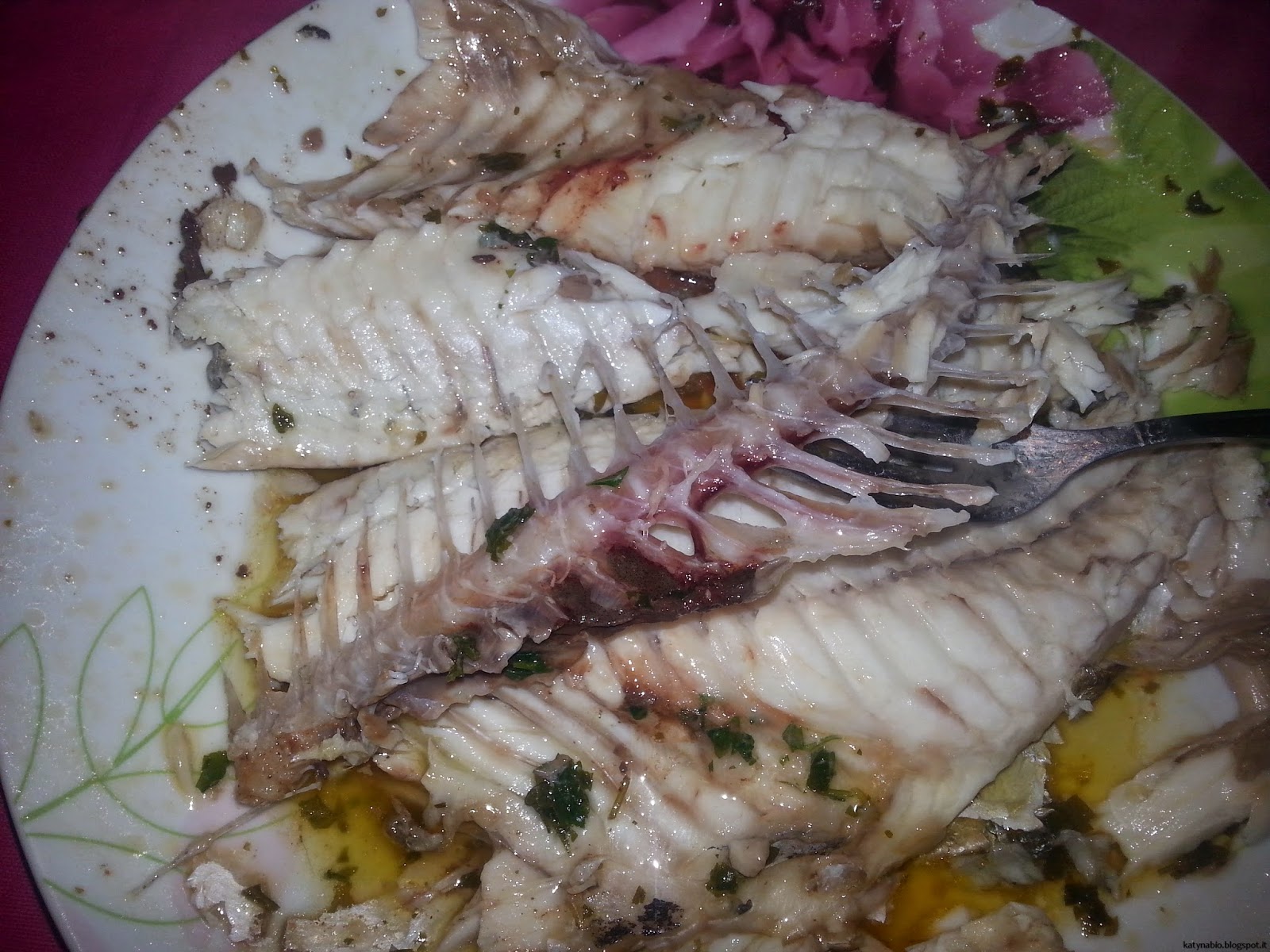
Il pesce è pronto quando la polpa appare soda e la salsa è rassodata. Ora togliete l'orata dal tegame. Pulitelo: togliete testa e coda


poi la pelle e le alette esterne


apritelo in due e togliete la lisca centrale ed eventuali spine grandi


dividetelo in filetti


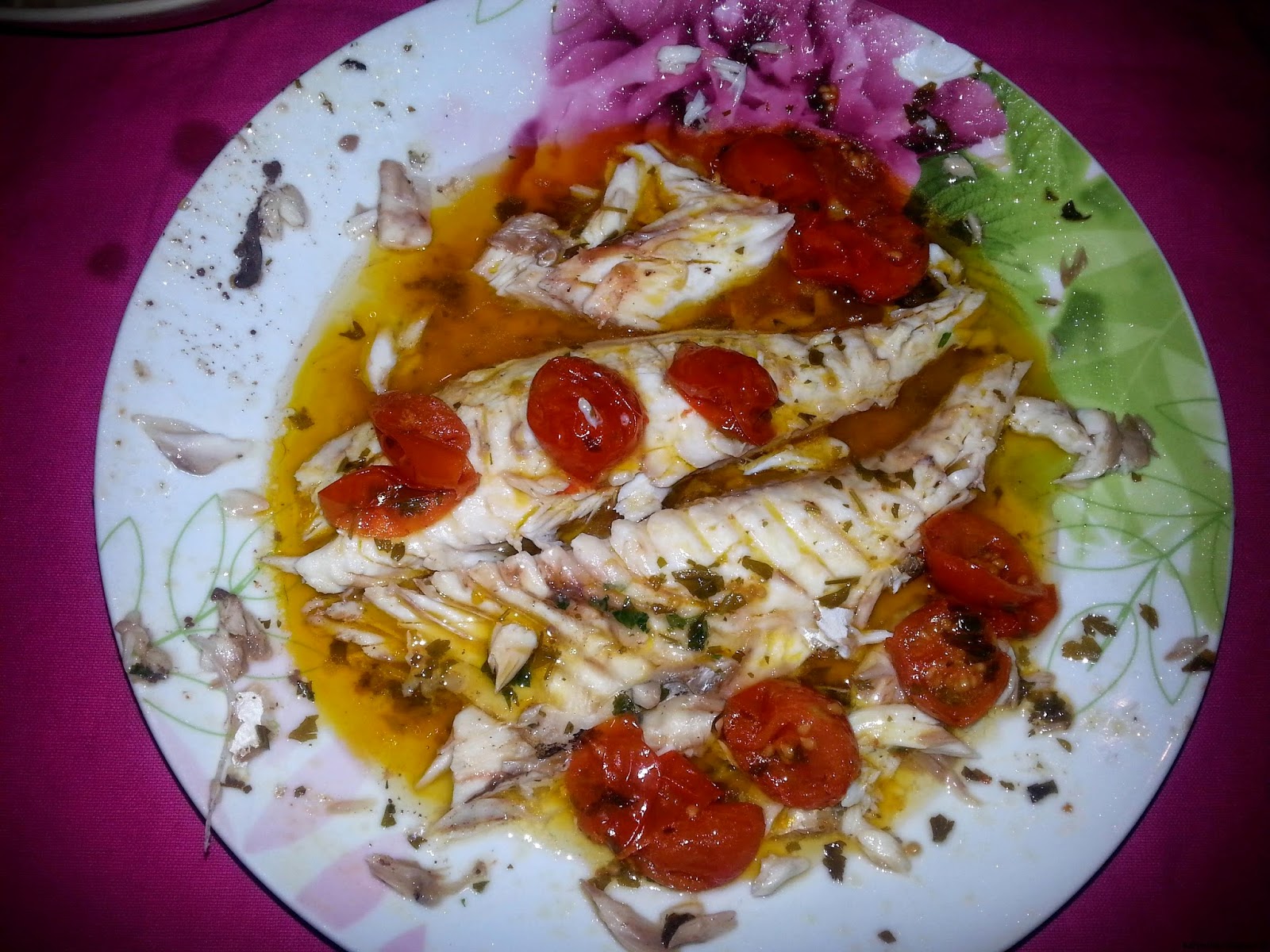
disponete sui piatti di portata e condite con la salsa e i pomodorini


ed ecco il mare nel piatto!!!

Fish drives me crazy! As soon as I can, I prepare a dish with good fish, seasoned and cooked in a simple way in order to enhance the natural flavor. The fishermen from Sardinia always say if the fish is fresh does not need elaborate toppings, just him! For this reason, I decided to get me a bream cooked in the Mediterranean style: water, extra virgin olive oil and white wine. Around I put the parsley and cherry tomatoes, and it's done!

Ingredients for two people:

bream of 600/700 grams, already cleaned and eviscerated;
extra virgin olive oil, so as to cover the bottom of the pan (about two fingers);
half a glass of water;
half a glass of white wine;
200 grams of cherry tomatoes;
parsley;
three cloves of garlic;
salt.

Procedure:

Usually when I buy the fish I ask the fisher seller to clean for me. So you just have to rinse the fish before cooking. Dry it with a kitchen paper. Now season it internally: put a pinch of salt, a clove of garlic (I use the organic one because it has got a more delicate aroma), a sprinkle of parsley.

In a pan, pour two fingers of oil, the water and the wine, a bit of salt and the parsley. Finally, the two remaining garlic cloves, sliced. Now the fish. One half of the bream should stay out of the pan, so then we will turn it halfway through cooking.

Place the cherry tomatoes, cut-and-half. Cook over in a medium heat for 20 minutes; then turn the bream and cook for another 20 minutes.

Sometimes you can pour the sauce on the top with the help of a spoon.

The fish is ready when the meat appears firm and the sauce is firming. Now remove the bream from the pan. Clean it: remove the head and tail, then the skin and the outer fins, open it in two parts and remove the central bone and any large thorns. Divide into fillets; place on a serving dish and season with the sauce and cherry tomatoes. Here is the sea in the pot !!!